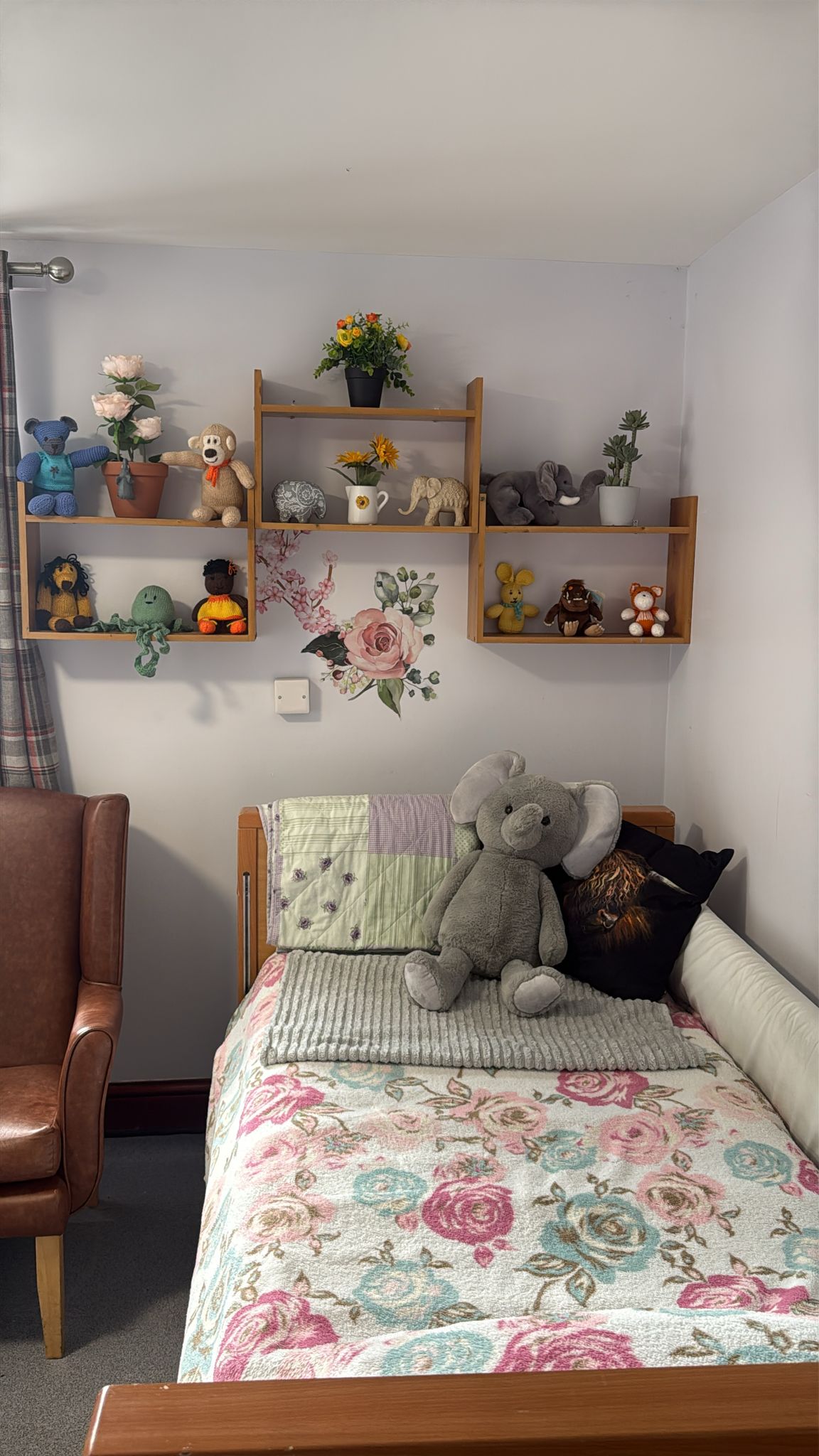


Support is most valuable when it creates room for a person to keep living as themselves. That can mean help with personal care or medicines, but it also means protecting choice, friendships, familiar routines and the ordinary pleasures that give a day its shape.
01 · PERSONAL CARE
Help that still leaves
room for choice.
Residential care can include support with washing, dressing, medicines and using the bathroom. Person-centred care goes further: it asks how the individual prefers that help to be given, what they can do for themselves and where a little encouragement protects independence.
Preferences can be very personal—when to get up, what to wear, how to take tea or how much help feels comfortable. A good care plan records these details and changes with the person.
02 · MEANINGFUL DAYS
Routine can be familiar.
It needn’t be rigid.
A meaningful day will look different to everyone. One person may enjoy a lively group, while another prefers the garden, a newspaper, music or helping with a familiar task. Choice matters more than a packed timetable.
Gentle movement, fresh air, creative activities and shared interests can sit naturally within the day. The important question is not simply “what is on?” but “does this matter to this person?”
Our practical guide to meaningful activities for people living with dementia explains how to choose an invitation, adapt support and learn from the person’s response.
03 · RELATIONSHIPS
Keep the people who matter
close to everyday life.
Friends, family, neighbours and community groups remain part of a person’s life after a move into care. Visits, phone or video calls, faith connections and trips into the local community can help those relationships continue.
Technology can help when the person enjoys it, but it should sit alongside real conversation and human company. Staff who know a resident’s history, interests and communication style can make connection feel natural rather than organised.
04 · THE RIGHT QUESTIONS
Look beyond a list
of services.
Ask how the home learns about a new resident, involves them in decisions and adapts when preferences change. Find out how family members are included, how activities are chosen and how the team supports someone who does not want to join a group.
The answers should reveal how support works in real life: with patience, flexibility and respect for the person’s own pace.
When comparing homes: ask what is included, what costs extra and how each service would fit the person’s assessed needs and preferences. Facilities, activities and visiting arrangements vary.
FURTHER READING