
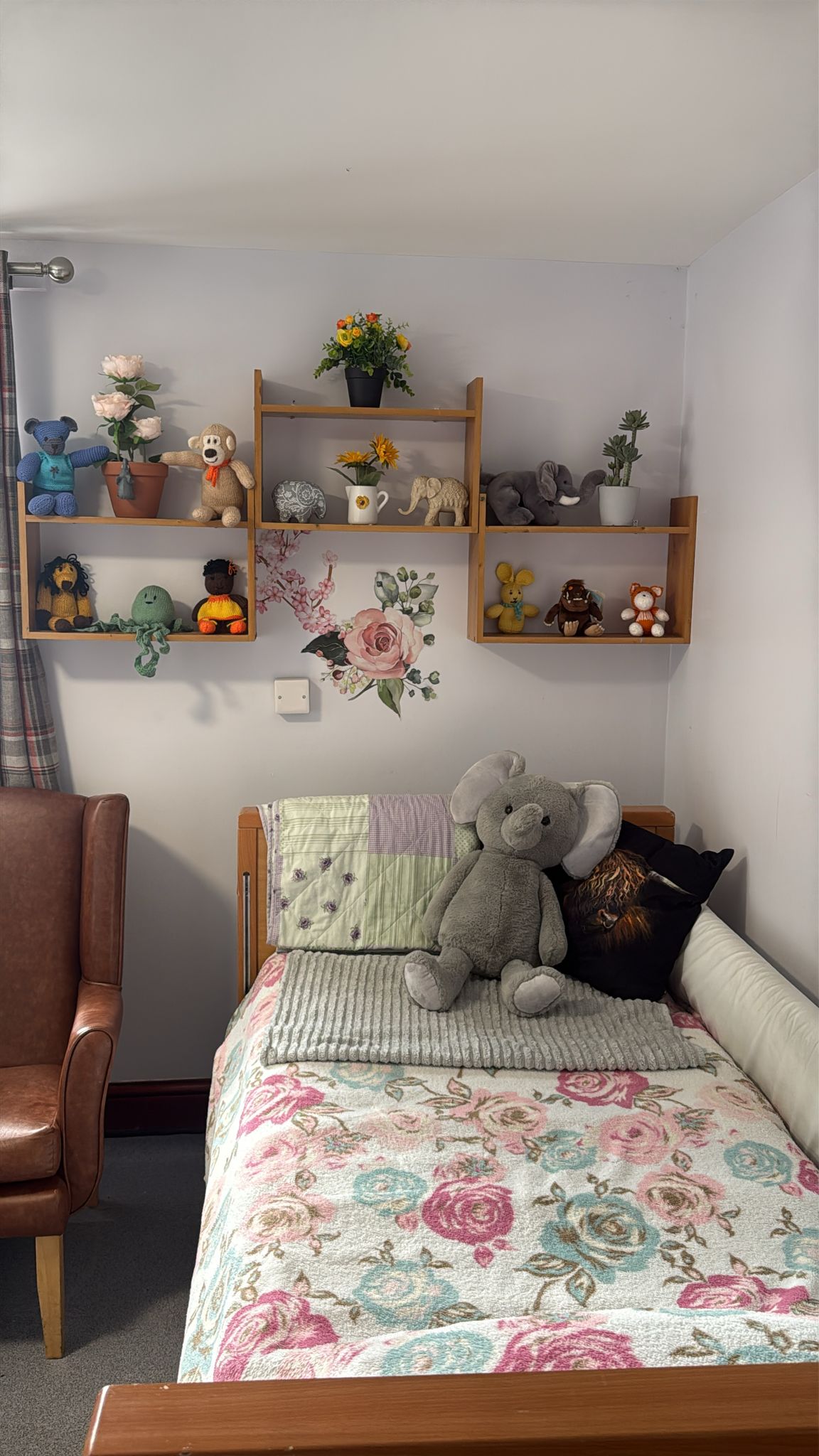
A bedroom becomes personal through the life it reflects. A favourite photograph, a much-used blanket or the radio station that starts every morning can say more about belonging than a perfectly styled room ever could.
01 · START WITH A CONVERSATION
Ask what makes home
feel like home.
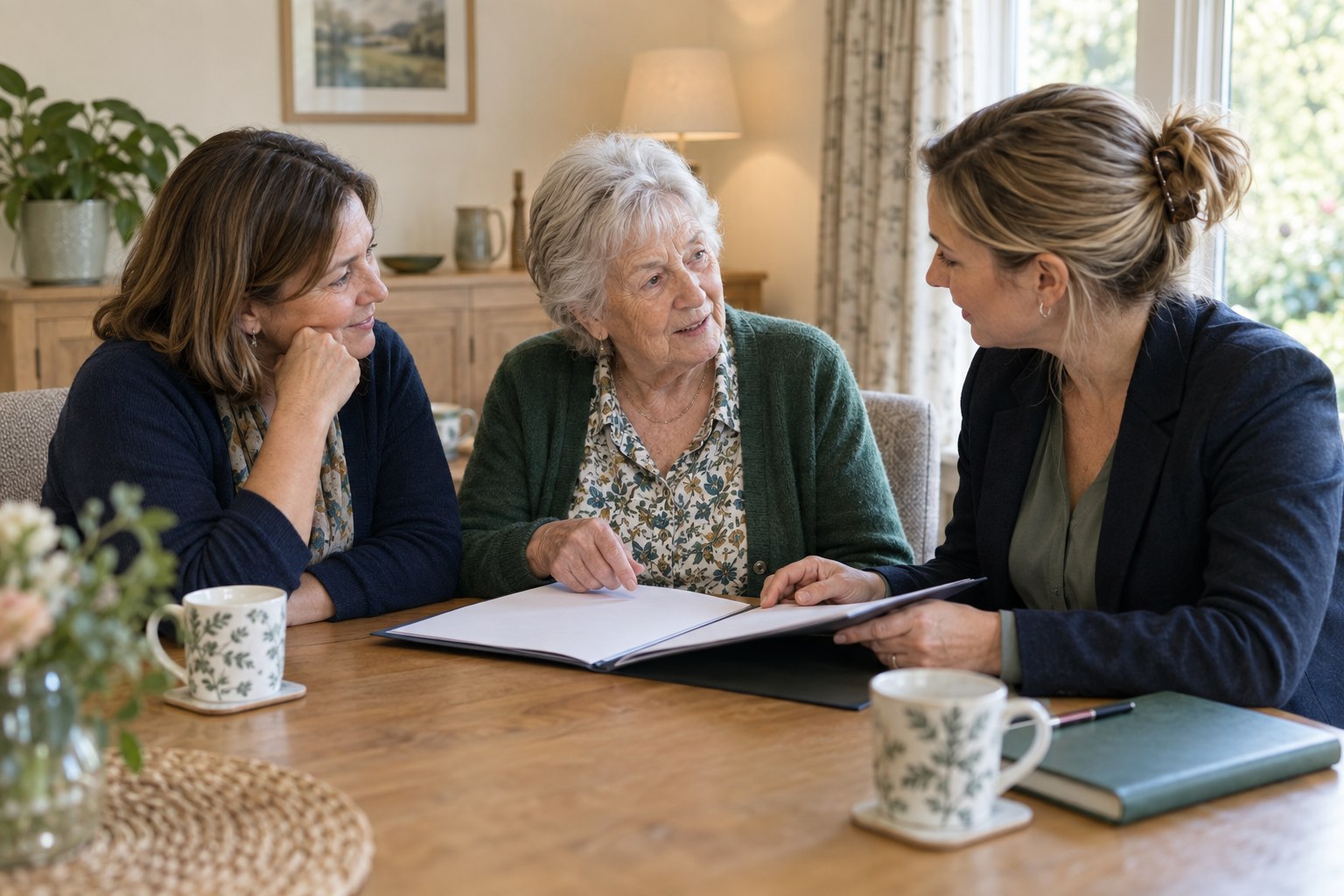
Involve the person in every choice they want to make. Ask what they notice first in their current room, what they use each day and what they would miss. If words are difficult, look together at photographs or objects and notice what draws their attention.
Family and friends can add useful history, but the room should reflect the resident’s preferences rather than anyone else’s idea of how it ought to look.
02 · BRING THE FAMILIAR
A few meaningful things
can carry a whole story.
Begin with objects that have a clear place in everyday life: framed photographs, a familiar duvet or cushion, a clock, books, ornaments, favourite toiletries or a piece of art. Music, radio programmes and familiar scents can be just as personal as things you can see.
A labelled photo album or memory box may be enjoyable for someone living with dementia, especially when it supports relaxed conversation rather than testing what they remember.
03 · KEEP IT PRACTICAL
Comfort works best
with clear space.
Place glasses, water, the call bell and other daily essentials where the person can see and reach them. Keep the route between the bed, chair, door and bathroom uncluttered, with suitable lighting and no trailing leads or loose rugs.
Try to keep frequently used items in consistent places. If signs or labels are helpful, make them easy to read and use words or pictures that feel natural to the person.
04 · KEEP THE RHYTHM
Home is also
how a day unfolds.
Tell the team about morning and evening routines, favourite drinks, preferred clothing, television or radio habits, faith practices and the ways the person likes to relax. These details help care feel familiar beyond the room itself.
Agree how family and friends would like to stay involved. A regular visit, phone call or shared activity can give the week helpful landmarks while a new routine develops.
05 · LET THE ROOM EVOLVE
Belonging grows
one detail at a time.
There is no need to finish everything on moving day. Start with the things that matter most, then notice what works. The resident may ask for more photographs, a different chair position or fewer objects once they have lived in the space.
Those changes are part of person-centred care: listening, reviewing and making the room more their own over time.
For the wider transition, our guide to helping a parent settle into a care home looks at moving day, family visits, shared routines and when to raise concerns.
Before moving larger items: ask the home what furniture, wall fixings and electrical items are permitted. The team can also help keep clear routes and place important belongings where they are safe and easy to use.
FURTHER READING