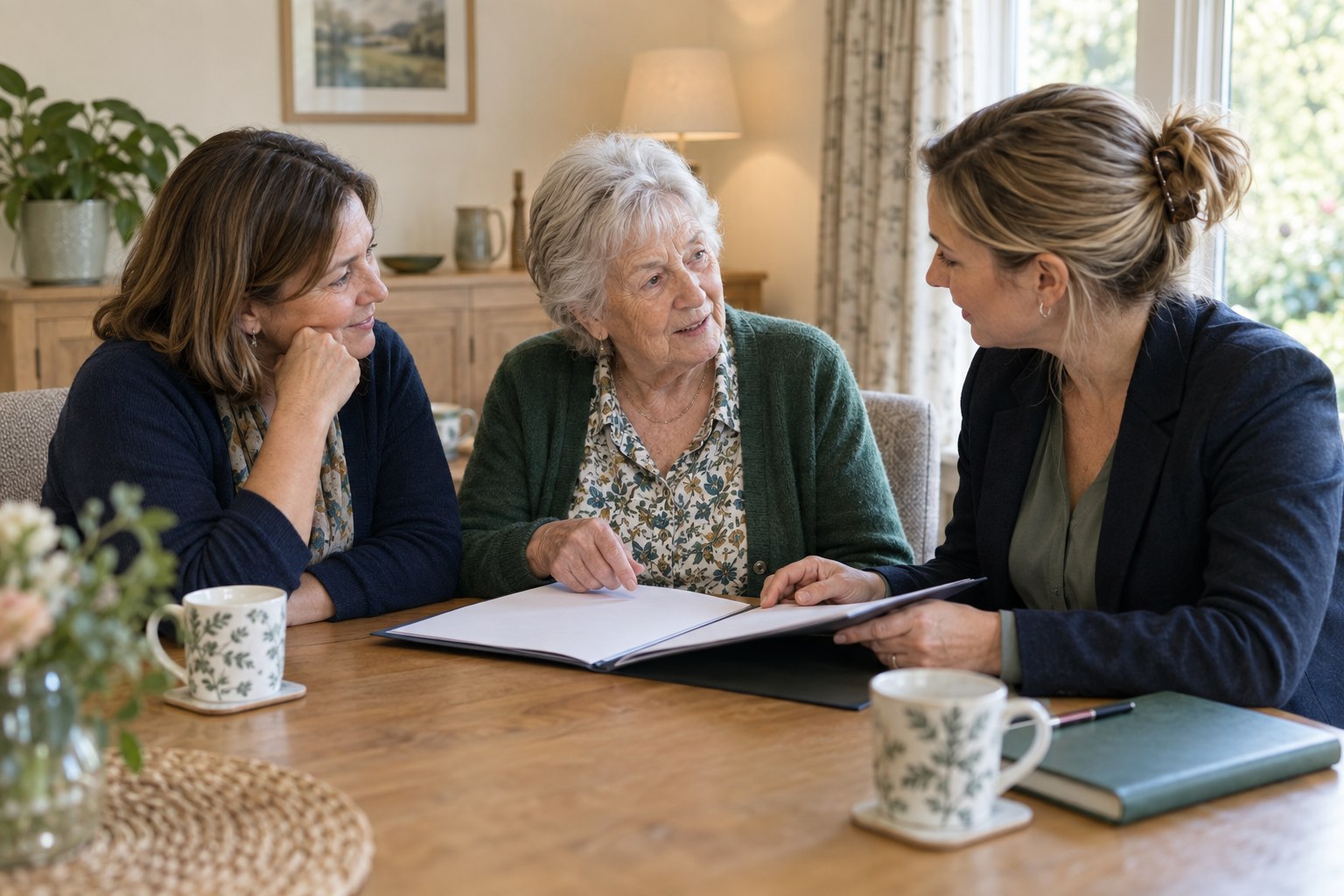


Choosing a care home in Bedfordshire can feel like a large decision made at a difficult time. Breaking it into clear steps helps: understand the support needed, build a realistic shortlist, visit in person and compare what each home says with what you see and hear.
01 · START WITH NEEDS
Begin with the person,
not the search results.
Write down the support needed now and what may be needed in the near future. Think about washing, dressing, using the toilet, taking medicines, eating, moving safely, memory, communication, sleep and emotional wellbeing. Include the person’s routines, relationships, culture, faith, interests and the things that help them feel secure.
Your local council’s adult social-care team can carry out a free needs assessment. This is separate from a financial assessment and is useful even when the person expects to pay for their own care. A clear assessment helps you identify whether residential care, nursing care or another form of support is appropriate.
If you are unsure about the difference between care settings, read our guide to residential care vs nursing care before making a shortlist.
02 · BUILD A SHORTLIST
Use evidence to make
the list manageable.
Search the Care Quality Commission directory and your council’s local care listings for homes in the area you are considering. On the exact CQC location page, check the current rating, the date of the latest assessment or inspection, older reports, the registered service type and any conditions on the home’s registration.
CQC looks at whether a service is safe, effective, caring, responsive and well-led. A rating is useful evidence, but it cannot tell you whether a particular home suits one person’s needs and preferences. Read the report behind the rating and note anything you want to ask about.
Location matters in practical ways. Consider how easily the people who matter can visit, access to familiar healthcare and whether the local setting feels right. When looking for a residential care home near Henlow, for example, visit the area as well as the building.
03 · VISIT AND OBSERVE
A care-home visit tells you
what a listing cannot.
Arrange a visit once you have a focused shortlist. Ask to see the areas residents use during an ordinary day, and take time to notice the atmosphere. Do staff greet people by name? Do residents appear comfortable? Is privacy respected? Are call bells answered calmly? Does the home feel clean, welcoming and lived in?
Try to include the person who may move in. Their reaction matters, including small signs of comfort or unease. If they cannot visit, ask whether a relative can tour the home first and how the team will learn about the person before admission.
Questions to ask when visiting a care home
- Needs: can the home safely meet current needs, and how are care plans reviewed?
- People: what training and experience do staff have, and who is available at night?
- Healthcare: how are medicines managed and GP, dentist or community-nursing visits arranged?
- Daily life: how flexible are meals, waking times, activities, outings and quiet time?
- Relationships: when can family and friends visit, call or join in with life at the home?
- Identity: how are culture, faith, communication needs and personal preferences supported?
- Concerns: how do residents raise a complaint, and how does the home respond?
- Moving in: can the room be personalised, and is a respite or trial stay available?
04 · LOOK AT DAILY LIFE
Picture an ordinary Tuesday,
not only moving day.
Bedrooms and gardens matter, but most of life is made from everyday moments. Ask to see a sample menu and activities calendar, then ask how much choice residents have in practice. Find out whether someone can keep a familiar routine, spend time alone, join a small group, go outside or continue a hobby that matters to them.
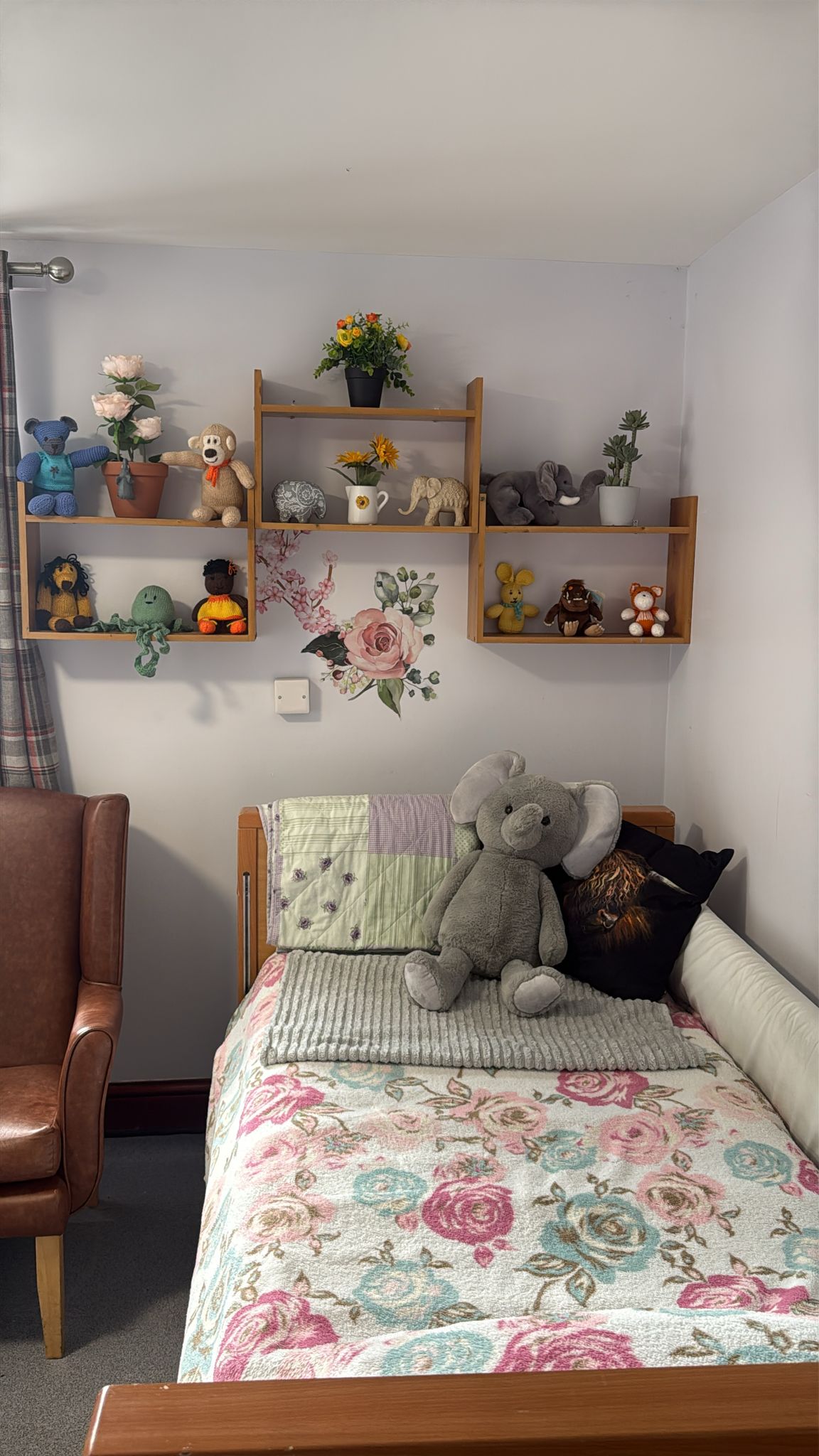
Good care should be centred on the individual. Ask how the home records preferences and life history, involves residents and families in reviews, and adapts support when something is not working. Our guide to making a care-home room feel like home has practical ideas for a more familiar move.
05 · COMPARE COSTS AND TERMS
Ask for the full picture
in writing.
Care-home fees depend on the support required and the home. Ask each shortlisted home for a written explanation of its weekly fee, what is included, which services cost extra, any deposit and how fees are reviewed. Avoid comparing a headline figure from one home with an all-inclusive figure from another.
Read the contract or terms before agreeing. Look for notice periods, arrangements during hospital stays or other absences, what happens if needs change, how the home may end the agreement, and any charges after a resident dies. Ask questions about anything that is unclear and keep copies of written information.
If the council may contribute, a financial assessment normally follows the needs assessment. Do not make an irreversible decision about a home, tenancy or property before the council has explained the position for the individual.
For a more detailed explanation of the England funding thresholds, property rules, NHS funding and questions about fees, read our guide to paying for a care home in Bedfordshire.
06 · PLAN FOR CHANGE
Ask what happens
if needs increase.
A suitable home should be honest about the care it can and cannot provide. Ask which changes it can usually support, when another assessment would happen and what could mean a move becomes necessary. Check whether the home provides personal care only or is registered to provide nursing care.
This question is especially important when someone has a progressive condition. A diagnosis of dementia does not automatically mean nursing care is required; the decision should be based on the person’s assessed needs and whether the home can meet them safely.
07 · A LOCAL OPTION IN HENLOW
Meet the home before
making the decision.
The Limes is a residential care home on Henlow High Street in Bedfordshire, registered for a maximum of 28 people. It offers residential personal care and support, including short respite stays and support for people living with dementia where an assessment shows the home can meet their needs. The Limes does not provide nursing care.
As at 7 September 2026, the home is rated Good overall by CQC, with the latest report published on 30 April 2026. Read the full CQC page and individual area ratings, explore our care services, and arrange a visit to ask the questions that matter to your family.
FREQUENTLY ASKED QUESTIONS
Choosing a care home:
common questions.
What should I look for when choosing a care home?
Start with whether the home can meet assessed needs. Then consider the current CQC report, staff, safety, daily routines, food, activities, visiting, privacy, location, fees and contract terms. Visit in person and include the prospective resident wherever possible.
How do I check a care home’s CQC rating?
Search the home’s exact name or postcode on the CQC website. Check that you have the correct location, then read the current rating, the report date, the five area ratings and any registration conditions. Read the report itself rather than relying only on the overall label.
What questions should I ask during a care-home visit?
Ask how the home will meet current and future needs, how staff are trained, how medicines and healthcare visits work, how residents shape daily routines, what fees include, how complaints are handled and what happens if the person’s needs change.
Can someone try a care home before moving permanently?
Some homes offer respite or short stays, subject to assessment and availability. Ask what the stay includes, whether the same admission checks apply and whether it can help inform a longer-term decision.
How are care-home fees and funding decided?
The fee reflects the home and the support required. A council needs assessment considers care needs; a separate financial assessment considers whether the council may contribute. Ask for individual advice and written costs because circumstances and fees vary.
About this guide: it covers care homes in England. Care arrangements, funding and terminology differ elsewhere in the UK. Individual suitability should always be confirmed through an assessment with the home and the relevant health or social-care professionals.
FURTHER READING