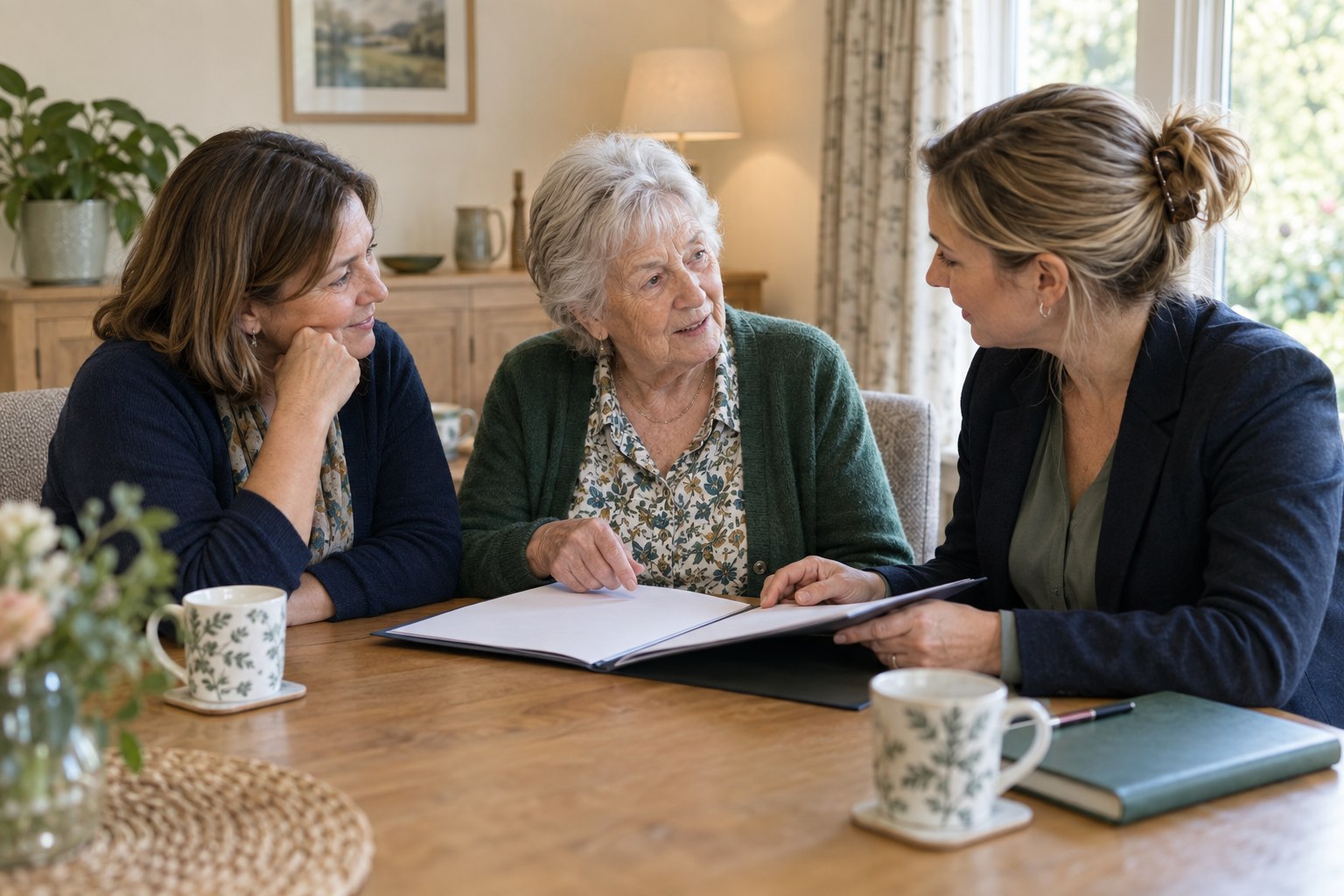


Falls become more common with age, but they are not simply an inevitable part of getting older. The most useful approach starts with the person: what has changed, when they feel unsteady and what would help them keep doing the things they enjoy.
01 · START WITH THE PERSON
Notice the pattern,
not just the moment.
A fall, stumble or new fear of walking is worth mentioning. A GP, pharmacist, physiotherapist or falls service can help look at the whole picture, including strength, balance, blood pressure, dizziness, medicines, eyesight, hearing, footwear and health conditions.
That fuller conversation matters because fall risk is rarely about one thing. A change that is right for one person may be unhelpful for another.
02 · MAKE THE ROUTE EASIER
Clear paths.
Calm movement.
Good lighting and uncluttered routes make everyday movement easier. Keep loose wires and rugs out of walkways, clear spills promptly and place regularly used items within comfortable reach. Non-slip mats, secure rails and grab rails may help when they are chosen and fitted properly.
Footwear matters too. Shoes and slippers should fit securely, stay on the foot and have a good grip. Walking aids should be suitable for the individual and close at hand when needed.
03 · KEEP MOVING
Strength supports
confidence.
Regular movement helps maintain strength and balance. The right starting point depends on the person’s current ability, health and confidence—even light activity can be useful for someone who has been inactive or is living with frailty.
For a person with a known fall risk, NICE recommends progressive, personalised exercise led by someone with suitable training. Restricting all movement through fear can reduce confidence and strength; tailored support offers a safer way forward.
04 · CHECK THE QUIET DETAILS
Health changes can
show up in balance.
Regular eye tests, hearing checks and foot care can all support safer movement. Eating well and drinking enough also matter, as dehydration or too little food can leave a person light-headed.
If a medicine seems to cause dizziness, drowsiness or unsteadiness, ask a GP or pharmacist for a review. Never stop or change prescribed medicine without professional advice.
If someone has fallen: pause and check for pain or injury before trying to move. Call 999 if they may have injured their head, back, neck or hip, or cannot get up. Use NHS 111 if they may be injured, in pain or unwell. Do not try to lift another person yourself.
FURTHER READING