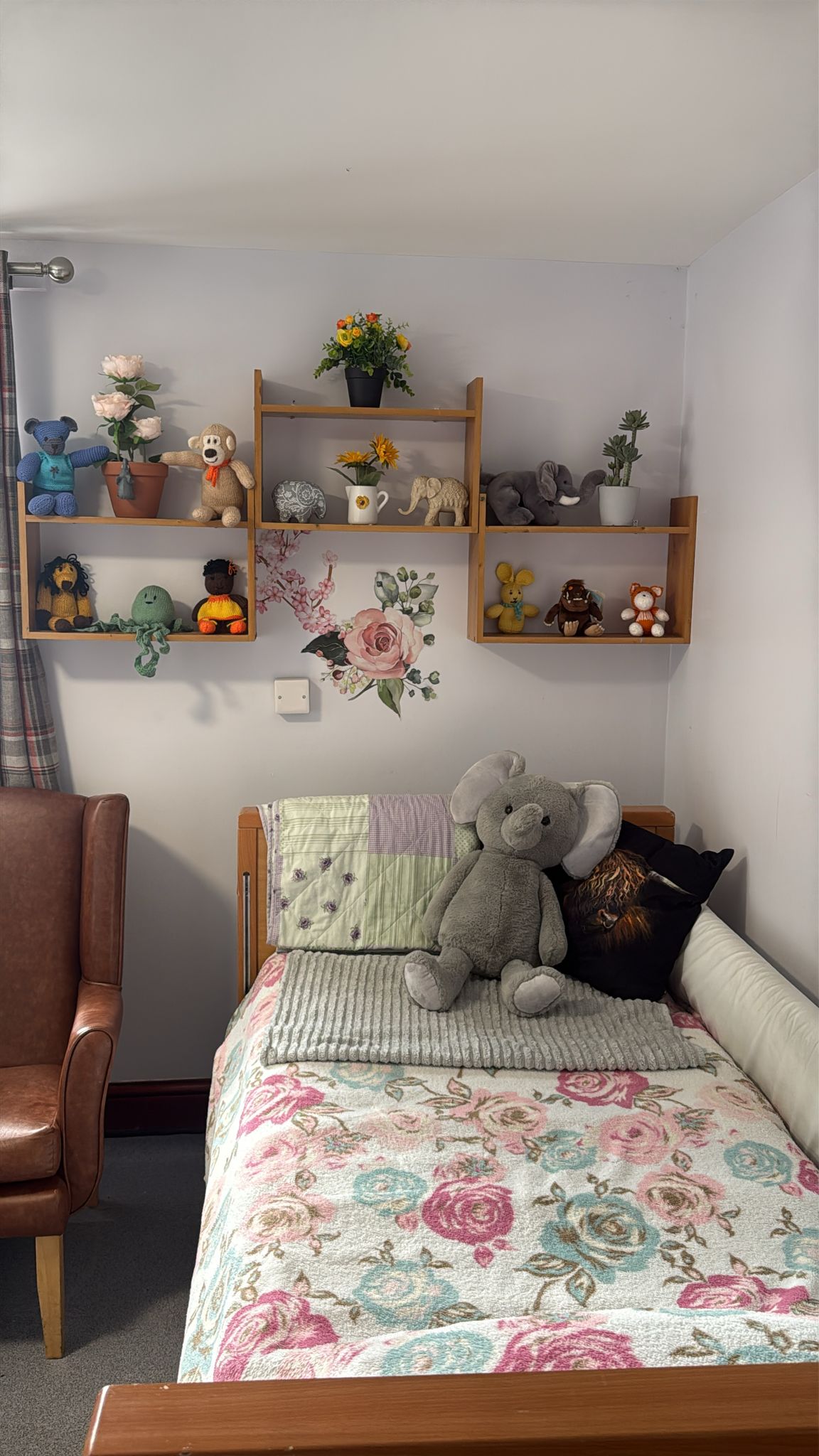


A move into a care home changes more than an address. It changes who is nearby, how help is offered and the small familiar cues that make a day feel comfortable. Helping a parent settle means protecting their choices and relationships while the team learns what works for them. There is no useful universal deadline by which a person must appear settled.
01 · BEFORE THE MOVE
Share the person,
not only the paperwork.
Assessment information is essential, but it does not tell a team whether someone likes to ease into the morning quietly, prefers a particular form of address or feels uncomfortable being helped without an explanation. NICE’s guidance on people’s experience of social care emphasises life history, preferences and the outcomes the individual wants.
With your parent’s agreement, prepare a short description of a comfortable ordinary day. Be specific enough for someone who has never met them to use it.
- Communication: preferred name, language, how best to explain things, and glasses or hearing aids that help.
- Daily rhythms: usual waking, meals, rest and bedtime; which routines matter most?
- Personal space: privacy, preferred support with personal care and whether company or quiet feels reassuring.
- Identity: relationships, culture, faith, interests and roles they value now.
- Reassurance: things they find comforting, and situations they find tiring or overwhelming.
- Contact: who they want involved and who may receive information or updates.
This is a starting conversation, not a fixed script. A long-standing preference may change in a new setting. Ask staff to check what the person wants today rather than relying entirely on what relatives remember.
02 · CHOICE AND INVOLVEMENT
A diagnosis does not
remove a person’s voice.
Age or dementia does not automatically mean someone cannot make decisions. As SCIE explains, mental capacity concerns a particular decision at a particular time, and people should be supported to decide. Someone who needs help with a complex accommodation decision may still choose their clothes, meals, visitors or how to spend an afternoon.
Do not assume that being “next of kin” by itself gives authority to make every decision. If there are concerns about capacity or disagreement about a move, ask the relevant professional to explain the proper assessment and decision-making process. Continue involving the person as fully as possible.
Family knowledge is valuable, but the resident’s wishes should remain central. CQC’s person-centred care requirements include involvement in planning and reviewing care. Ask how your parent can express preferences, request changes and raise a concern in a way that works for them.
03 · MOVING DAY
Make the arrival
manageable.
Agree a practical arrival plan with the home: who will welcome the person, which essential information is needed and whether there is a quieter time to arrive. Avoid turning the day into a long procession of introductions. Allow opportunities to rest and explore gradually.
The Alzheimer’s Society’s care-home guide recommends familiar belongings and involving the person in arranging them where possible. A few meaningful items can be enough initially. If a move happens urgently, attend to immediate comfort first; a room does not have to be finished on day one. Our guide to personalising a care-home room covers belongings in more detail.
Confirm how current medicines, allergies and recent changes will be handed over and checked. NICE recommends coordinated medicines reconciliation when people move between settings. Ask who has checked the up-to-date list and whether anything remains unresolved. Family information can help, but relatives should not be expected to prescribe, alter medicines or perform the professional reconciliation themselves.
04 · FAMILY VISITS
Keep relationships
part of everyday life.
There is no single correct number or length of visits. Ask what your parent wants, consider energy and routines, and agree how the home will support contact. An ordinary shared activity—a newspaper, a cup of tea or looking at the garden—may feel more comfortable than a visit focused only on asking whether everything is all right.
Be cautious about blanket advice to stay away so someone can “settle”. In England, CQC Regulation 9A requires providers to facilitate wanted in-person visits unless exceptional circumstances prevent them. Restrictions should be individual, proportionate and reviewed; the guidance rejects blanket or long-term visiting restrictions.
A resident choosing a quieter day differs from a home imposing a visiting ban. If a restriction is proposed, ask why it is necessary, what less restrictive options were considered and when it will be reviewed. Calls and video contact can supplement visits, rather than automatically replace contact the person wants.
05 · UNDERSTANDING DIFFICULT MOMENTS
Look beyond
“they are just settling in”.
A person may miss home or need reassurance, but distress deserves attention rather than a countdown. For someone living with dementia, NICE recommends assessing possible causes of distress, including pain, illness, discomfort, communication difficulties and the care environment. Being quiet or declining activities does not reliably tell you what someone feels.
Describe observations instead of guessing a diagnosis: what changed, when did it happen, what was happening nearby and what helped? Share them promptly with the team and ask what assessment or adjustment is needed. Do not wait for a promised settling period to end before raising a concern.
Sudden confusion needs urgent help
If someone suddenly becomes confused, go to A&E or call 999. The NHS advises urgent help because sudden confusion can have serious causes. It should not be assumed to be dementia progression or an ordinary response to moving. Stay with the person and offer simple reassurance while help is arranged.
A practical example: notice, share, agree, review
In an illustrative situation, a parent repeatedly becomes upset around the evening handover. The family describes the quiet evening routine they enjoyed at home. Staff consider health, comfort, communication and surroundings, then agree an appropriate adjustment and a follow-up conversation. The timing is useful information; it does not prove the cause. The next step is an agreed response, not an assumption that the person is “difficult”.
06 · REVIEW WHAT IS WORKING
Measure comfort,
choice and connection.
A successful transition is not measured by joining every group or never expressing sadness. A more useful question is whether support is becoming better matched to the person. Ask for a named contact and agree when to discuss progress, sooner if something is concerning.
Use these questions as a family discussion aid:
- What does the person say feels comfortable, difficult or unfamiliar?
- Can they find or request help in a way they understand?
- Are communication aids available and working?
- Are food, drink, sleep, comfort and personal-care preferences being understood?
- Do they have wanted contact, meaningful occupation and time alone?
- Have concerns led to a clear action, an owner and a date to follow up?
These are not diagnostic tests or a substitute for staff assessment. They help turn a broad worry into a specific conversation. Meaningful activities may be quiet and individual as well as social; the person’s response matters more than the timetable.
For relatives, relief and guilt may coexist. Your role can continue through companionship, shared history and helping the team understand your parent. If you are planning a move near Henlow, ask The Limes about preparation and family involvement alongside the individual assessment.
FREQUENTLY ASKED QUESTIONS
Settling into care:
common questions.
How long does it take to settle into a care home?
There is no reliable deadline for everyone. Look at comfort, choice, relationships and whether concerns are being addressed, rather than expecting a person to adjust within a set number of days.
Should family stop visiting at first?
There should not be a blanket settling-in ban. Agree contact around the resident’s wishes and needs. Ask for the reasons and review arrangements if an individual restriction is proposed.
What if my parent keeps asking to go home?
Listen to what they are expressing and discuss patterns with staff. They may be communicating a feeling, a preference or a concern that needs exploration. Avoid arguments, dismissing the request or assuming one response will suit everyone.
About this guide: sources checked on 18 October 2026. It is a family discussion guide, not a clinical assessment or a description of an individual resident. Legal references concern England’s care-home system, with mental-capacity principles applying in England and Wales. Specific support should reflect the person’s wishes, assessed needs and care plan.
FURTHER READING
Useful, trusted sources
- Alzheimer’s Society: supporting a person with dementia in a care home (PDF)
- CQC: Regulation 9, person-centred care
- SCIE: assessing mental capacity
- NICE NG86: people’s experience in adult social care services
- CQC: Regulation 9A, visiting and accompanying
- NICE: assessing and managing distress in people with dementia
- NHS: sudden confusion (delirium) and urgent help
- NICE SC1: managing medicines in care homes