

Planning respite care often brings two questions at once: will the person feel comfortable away from home, and will their family feel able to take a break? A little preparation helps everyone know what to expect. Start with the person’s needs and preferences, then ask the care home how a short stay would work in practice.
01 · UNDERSTAND THE OPTIONS
What does a short
respite stay mean?
Respite care is temporary support that gives an unpaid carer a break while the person they care for is looked after. It can happen in several ways, including support at home, a day service or a short stay in a care home. The right option depends on the person’s needs, wishes and the support available locally.
A care-home stay might be planned around a family carer’s holiday, work commitment or time to rest. It may also give someone a chance to experience life in a different setting. A short stay is not automatically a step towards moving in permanently; the purpose and end date should be clear to everyone involved.
If you are comparing types of care, our guide to residential care and nursing care explains the difference. The Limes offers short respite stays as part of its residential care, subject to an individual assessment.
02 · START WITH THE PERSON
Make space for
their questions, too.
Where possible, talk with the person about why a break is being considered and what would help them feel at ease. Ask what they would want to keep the same: perhaps a morning cup of tea, a favourite programme, a quiet afternoon or regular contact with someone close to them. Involve them in visiting the home and choosing what to take.
Tell the prospective home about personal-care needs, mobility, communication, medicines, food preferences, sleep, hobbies and anything that may cause worry. Ask how it assesses new guests and whether it can meet the person’s needs safely throughout the proposed stay. If registered nursing care is needed on site, a residential home such as The Limes will not be the right setting for that need.
A local council care needs assessment can help identify suitable support. Unpaid carers can ask for a separate carer’s assessment to discuss their own needs and possible breaks. These are different from a care home’s decision about whether it can offer an individual place.
03 · ASK BEFORE BOOKING
Clear answers make
planning feel easier.
Short-stay arrangements differ between homes. Request written information for the dates you have in mind, then ask anything that is unclear before agreeing to a stay.
Questions to ask a respite care home
- Suitability: how will the home assess the person’s needs, and what support can it provide?
- Dates: are the proposed arrival and departure dates available, and is there a minimum stay?
- Fees: what is the total cost, what does it include, and could anything cost extra?
- Medicines: what information and supplies does the home need, and how should they be handed over?
- Daily life: what choices are there around meals, activities, rest and familiar routines?
- Contact: how can family and friends visit or call, and who should they contact with a concern?
- Changes: what happens if care needs change or the planned dates need to move?
If you hope the council may help fund a break, ask its adult social-care team about assessments and funding before committing to a booking. The NHS guide to respite care explains that council funding depends on an assessment; costs and arrangements vary.
04 · PREPARE FOR ARRIVAL
Pack for comfort,
not just convenience.
Ask the home for its own packing and medicines guidance first. A practical starting list is comfortable clothes, sleepwear, footwear, toiletries, glasses or hearing aids and their cases, plus a few familiar things the person would like nearby. Label belongings if the home recommends it, and leave valuables at home unless there is a clear reason to bring them.
A short written note can help staff get to know the person quickly. Include preferred name, important routines, food likes and dislikes, how they communicate, and contact details for family or friends. Check how the home wants medical information, prescriptions and medicines supplied; do not assume that arrangements used at home will be the same during a stay.
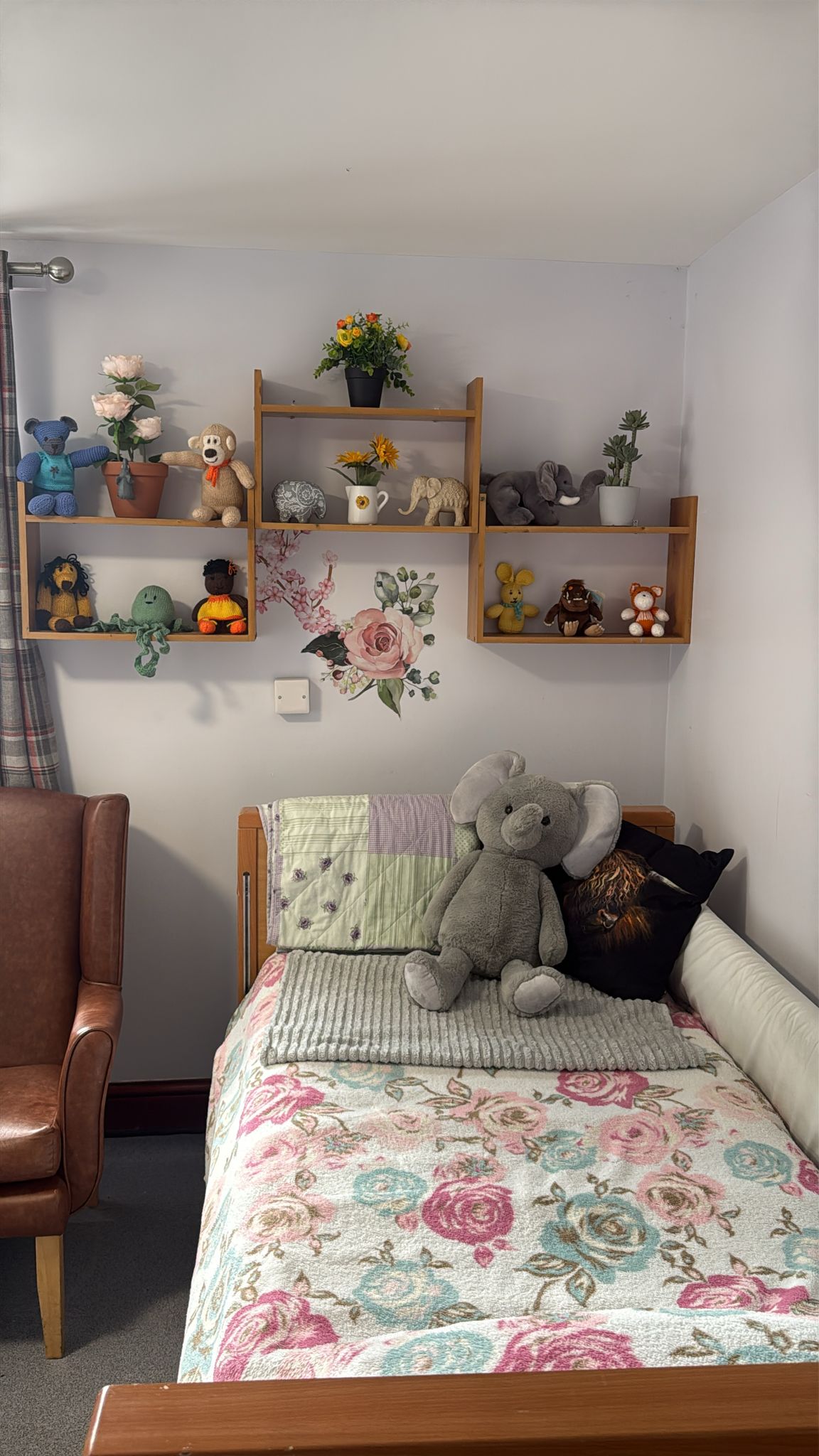
Familiarity matters even for a brief visit. A family photo, favourite book or well-loved cardigan may be enough. For more ideas, read our guide to making a care-home room feel familiar.
05 · DURING THE STAY
Keep the connection
that feels right.
At arrival, allow time for an introduction and a calm handover. Confirm who to speak to if a question comes up, and agree how the home will contact family if something changes. A planned call or visit can be reassuring, but let the person’s wishes guide how often to check in.
A good break should work for the family carer as well as the person staying. Try to use the time for the rest or commitments you planned. If the first day brings mixed feelings, that does not by itself tell you whether the stay is working. Ask the person how they feel and speak with the team about any concerns.
06 · RETURNING HOME
Finish with a useful
conversation.
Before departure, confirm collection arrangements, belongings and any medicines or information that need to go home. Ask how the person spent their time and whether there is anything the family should know about routines or support needs. Share what the person enjoyed or found difficult.
Back at home, give the person time to settle into familiar rhythms. If the break helped, make a note of what worked for a possible future stay. If it was difficult, talk through why before deciding whether a different kind of respite support might suit them better.
If you are considering a short stay near Henlow, contact The Limes to discuss the person’s needs, possible dates and what a visit could involve. The team can explain whether its residential respite care may be suitable.
FREQUENTLY ASKED QUESTIONS
Short respite care stays:
common questions.
How long is a respite care stay?
There is no single length for every provider or person. Ask the care home about the dates it can offer, any minimum or maximum stay, and whether a change to the plan would be possible.
Does someone need an assessment before a respite stay?
A care home needs enough information to decide whether it can safely meet the person’s needs. A council care needs assessment can help identify suitable support and is required if you are seeking council-funded respite care. An unpaid carer can also ask for their own carer’s assessment.
What should someone bring to respite care?
Ask the home for its list. Comfortable clothing, toiletries, glasses or hearing aids, and a few familiar items are a useful starting point. Confirm exactly how the home needs medicines and care information to be supplied.
Can family and friends visit during a short stay?
Ask the individual home how visiting and calls work. Agree a plan with the person staying so contact supports their preferences and helps them feel settled.
Is respite care available at The Limes?
The Limes offers short residential respite stays in Henlow, Bedfordshire. Whether a stay is possible for a particular person and date depends on an individual assessment and current availability. Contact the team to discuss the options.
About this guide: arrangements vary by person and provider. A prospective home needs to confirm that it can meet an individual’s needs, and any dates, fees or funding should be checked directly before making plans. The Limes provides residential personal care, not nursing care.
FURTHER READING